

Every runner you look up to started in the same place: standing in a shoe aisle, staring at a wall of options, wondering which pair is the right one. The good news is that choosing your first running shoe is simpler than the industry makes it sound. You do not need the most expensive pair or a degree in biomechanics. You need a shoe that fits, supports how you actually run, and makes you want to lace up again tomorrow. Here is how to choose running shoes for beginners, one practical step at a time.
Start With How You Run, Not What Looks Good
Before you compare brands, get honest about your running. Are you jogging a few easy miles around the neighborhood, training for a first 5K, or mixing runs with gym sessions? How many days a week will you actually get out the door? A beginner running three times a week on pavement has very different needs from someone logging long miles on gravel. Write down your weekly mileage, your usual surface, and your main goal. That short list narrows hundreds of shoes down to a handful.
Fit Comes First, Always
Fit matters more than any spec sheet. Your feet swell during a run, so you want roughly a thumb’s width of space between your longest toe and the front of the shoe. The heel should lock in without slipping, and the widest part of your foot should sit on the widest part of the shoe instead of spilling over the edge. Shop late in the day when your feet are at their largest, and wear the socks you actually run in.
Cushioning: How Much Do You Actually Need?
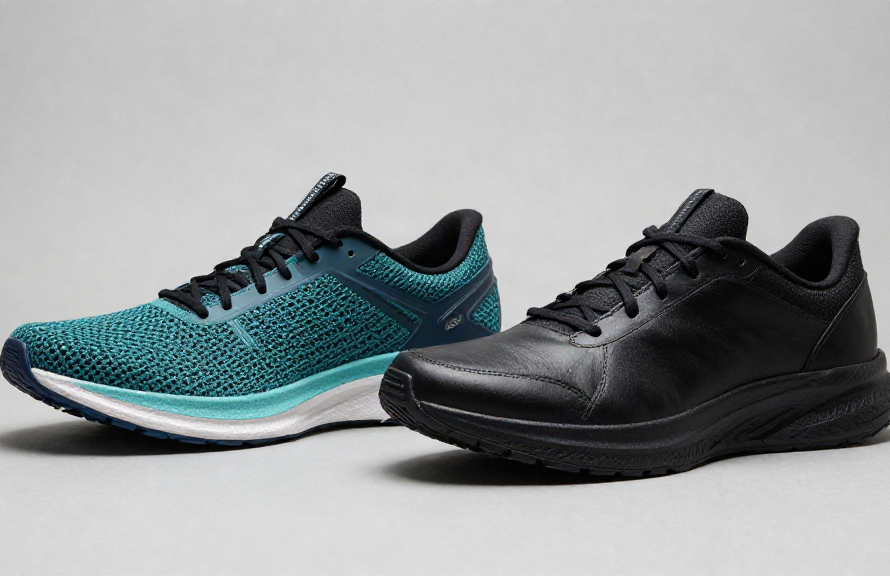
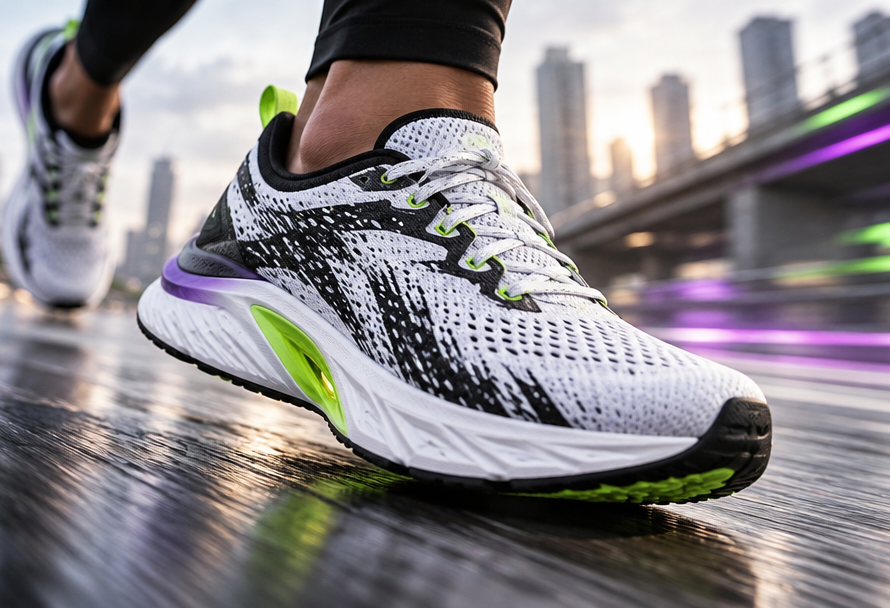
Cushioning is the foam between you and the ground, and more is not automatically better. New runners often do well with a moderate amount: enough softness to absorb impact on hard pavement, enough firmness that you still feel the road and stay stable. If you have had joint pain, or you run mostly on concrete, lean softer. If you prefer a quicker, more connected feel, lean firmer. Mesh uppers help here too, keeping the shoe breathable and light on warmer runs.
Heel-to-Toe Drop, Explained Simply
Drop is the height difference between the heel and the toe of the shoe. A higher drop, around 8 to 12 millimeters, places your foot closer to a natural walking position and tends to feel forgiving for beginners. A lower drop, under 6 millimeters, asks more of your calves and ankles. Most first-time runners are happiest starting in the middle or slightly higher, then experimenting once they have a few hundred miles behind them.
Match the Shoe to Your Terrain
Where you run shapes what you need. Smooth roads and sidewalks reward lightweight mesh uppers and reliable cushioning. Park paths and packed gravel want a bit more grip and a slightly tougher outsole. Trails demand deeper lugs and a more protective upper. Be honest about the surface you will run on most, because that is where the shoe will spend its life.
The Beginner’s Try-On Checklist
Take this list with you to the store, or use it the moment a delivery arrives at your door.
- Thumb’s width of space in front of your longest toe while standing.
- Heel stays put with no slipping when you walk and jog.
- No pressure points across the top of the foot or along the sides.
- The shoe bends where your foot bends, near the ball of the foot.
- You can wiggle your toes freely without the upper feeling loose.
- Walk, then jog, on a hard floor for at least a few minutes.
- If it pinches now, it will not break in later. Return it.
How to Pick Your First GORUN Sneaker
Once the basics are clear, the fun part starts: choosing a pair that fits your training and your personality. At GORUN we build bold, performance-ready sneakers for runners who treat the sport as part of who they are, and every pair sits in an accessible price range, so a first running shoe never has to feel like a sacrifice.
For Road Miles and Daily Training
If most of your runs happen on pavement, start with a lightweight mesh trainer. The SHARK GORUN men’s blue and green athletic mesh sneakers deliver cushioned, breathable support for road runs and gym sessions, while the FLY 71 black and white abstract mesh sneakers keep things light for daily miles and casual wear.
For a Street-to-Track Look
Some runners want a shoe that works as hard off the track as on it. The Neon Green Black Abstract High Top Sneakers bring a bold, graphic finish to a supportive silhouette. The BLUWAVER unisex teal and black mesh sneakers and the Evil555 black and red wave print mesh sneakers both pair breathable comfort with an eye-catching upper that moves easily from run to street.
For a Style-First Entry Pair
If your first running shoe doubles as your everyday sneaker, leather and art-print options deserve a look. The REX-LOB men’s low-top leather sneakers in black, red, and hot pink bring abstract streetwear energy, the PARK77 women’s purple and pink mesh sneakers add vivid comfort, and the DAYFLOW women’s purple abstract art low-top leather sneakers blend soft leather with a standout print.
A Word on Budget
You do not need to spend a fortune to run well. Set a range you are comfortable with, then spend at the top of it on fit and cushioning rather than on logos. Replace your shoes roughly every 300 to 500 miles, or sooner if the foam feels flat or the outsole is worn smooth. A second pair in rotation stretches the life of both.
Lace Up and Go
Choosing your first running shoe comes down to four things: a fit that leaves room, cushioning that matches your surface, a drop that suits your body, and a look that makes you want to head out the door. Get those right and the rest is just miles. Find your pair, lace up, and let’s get moving.