


R10 Amazing Benefits of Running for Your Body and Mind
Running is one of the simplest and most accessible forms of physical activity. You don’t need an expensive gym membership, sophisticated equipment, or years of athletic experience to get started. A comfortable pair of running shoes, a safe place to move, and a little determination can be enough.
But the benefits of running go far beyond physical fitness.
Regular running can support cardiovascular health, improve mental wellbeing, strengthen muscles and bones, enhance sleep quality, and help people feel more energetic throughout the day.
And you don’t have to be a marathon runner to experience these advantages.
At GORUN, we believe running belongs to everyone. Whether you’re a complete beginner, an occasional jogger, or someone looking to become more active, every step toward better health matters.
Let’s explore ten important benefits of running and how you can begin enjoying them.
1. Running Improves Cardiovascular Health
One of the most important benefits of running is its positive effect on your cardiovascular system.
Your heart is a muscle, and regular aerobic exercise helps it work more efficiently. When you run, your heart rate increases to deliver oxygen-rich blood to your working muscles.
Over time, consistent aerobic activity can improve cardiovascular fitness and support healthy blood pressure.
Research has also associated recreational running with a lower risk of cardiovascular disease and premature death.
You don’t need to run long distances to support your heart health. Even relatively short sessions can contribute to an active lifestyle.
Beginner tip: Start with 15–20 minutes of alternating walking and gentle jogging. Gradually increase your activity as your endurance improves.
2. Running Supports Better Mental Health

Running isn’t just beneficial for your body. It can also be an effective way to support your mental wellbeing.
Physical activity is associated with improvements in mood and reductions in symptoms of anxiety and depression.
During exercise, your body produces and regulates various chemicals involved in mood, stress responses, and feelings of wellbeing.
Many runners also appreciate the opportunity to temporarily disconnect from work, technology, and everyday responsibilities.
A comfortable run through a park or neighborhood can provide valuable time to clear your thoughts.
Running outdoors may offer additional benefits through exposure to natural environments and daylight.
However, running isn’t a replacement for professional mental health treatment when it’s needed.
GORUN perspective: You don’t have to run faster or farther to feel better. Sometimes a peaceful 15-minute jog is exactly what you need.
3. Running Can Help With Healthy Weight Management
Running requires energy, making it a useful activity for people interested in maintaining a healthy body weight.
The amount of energy used depends on several factors, including body size, exercise intensity, duration, and terrain.
When combined with balanced nutrition and sustainable daily habits, running can contribute to weight management.
However, running shouldn’t be viewed exclusively as a weight-loss activity.
You can improve cardiovascular fitness, strength, confidence, and mental wellbeing without experiencing significant changes on the scale.
In fact, focusing only on weight can sometimes distract from the many other rewards of becoming physically active.
At GORUN, our philosophy is simple: Every body deserves the opportunity to enjoy movement.
Your running journey should be about feeling healthier and stronger, not meeting someone else’s expectations about appearance.
4. Running Helps Strengthen Muscles and Bones
Running is a weight-bearing activity, meaning your body supports its weight while moving.
This creates mechanical loading that can help maintain bone health and stimulate adaptations in muscles and connective tissues.
Your calves, quadriceps, hamstrings, glutes, and core all contribute to running.
With consistent practice, these muscles can develop greater endurance and become more accustomed to repeated movement.
Weight-bearing activity can also support bone health, although the benefits depend on factors such as age, training history, nutrition, and overall health.
Beginners should progress gradually because bones, tendons, and muscles need time to adapt.
Increasing running distances too quickly can contribute to overuse injuries.
Beginner tip: Combine running with simple strength exercises such as calf raises, squats, and step-ups. Include recovery days between challenging sessions.
5. Running May Improve Sleep Quality
Getting enough quality sleep is essential for physical recovery, mental performance, and general wellbeing.
Regular physical activity is associated with improved sleep quality and can help some people fall asleep more easily.
Running may also support a consistent daily routine, particularly when exercise becomes a regular morning or afternoon habit.
However, everyone’s response is different.
Some people enjoy running in the evening without experiencing sleep problems. Others find that intense exercise too close to bedtime makes it harder to relax.
Experiment with different workout times to discover what works best for your schedule.
Remember that good sleep also depends on factors such as stress, caffeine consumption, bedroom conditions, and consistent sleeping hours.
GORUN tip: Choose a running schedule that supports your lifestyle rather than forcing yourself into a routine you can’t maintain.
6. Running Builds Endurance and Everyday Energy
Have you ever felt unusually tired after climbing stairs, walking uphill, or carrying groceries?
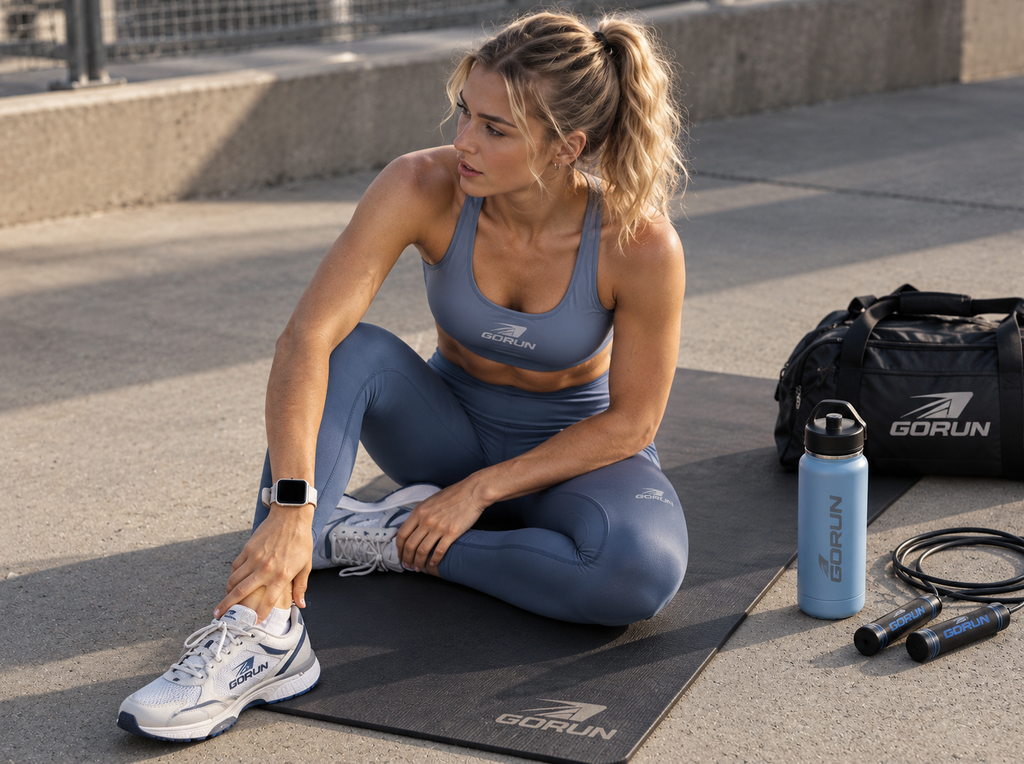
Improving aerobic fitness can make everyday physical activities feel easier.
Running challenges your cardiovascular and respiratory systems to deliver oxygen to working muscles.
As your fitness develops, your body becomes better adapted to sustained physical activity.
You may gradually notice that you can walk farther, jog longer, or complete daily tasks with less effort.
The improvement won’t happen overnight.
But after several weeks of consistent training, many beginners begin noticing changes in their endurance.
You might start by jogging for just 30 seconds.
A few weeks later, you may comfortably jog for several minutes.
Eventually, running a mile or participating in your first 5K may become realistic goals.
These small improvements can create a powerful sense of progress.
7. Running Builds Confidence and Personal Discipline
One of the most rewarding aspects of running is discovering what you’re capable of achieving.
Running provides clear opportunities to set goals, practice consistency, and recognize personal improvement.
Your first uninterrupted five-minute jog might seem insignificant to an experienced runner, but for someone who has never run before, it can be a major accomplishment.
Over time, these achievements can strengthen your confidence.
You begin to recognize that progress doesn’t always require extraordinary talent.
Often, it comes from showing up, practicing regularly, and being patient.
Running can also encourage habits that extend into other areas of life, such as planning, time management, and setting realistic goals.
However, discipline doesn’t mean pushing through pain or ignoring your body’s needs.
Rest and flexibility are part of a healthy routine.
Remember: Progress isn’t about being perfect. It’s about continuing to move forward.
8. Running Creates Opportunities for Friendship and Community
Running is often described as an individual sport, but it can also be an incredibly social activity.
Running clubs bring together people from different backgrounds, ages, professions, and fitness levels.
Some members are preparing for races. Others simply enjoy walking or jogging with friends.
The shared experience creates opportunities for encouragement, conversation, and meaningful relationships.
For beginners, joining a supportive running group can make exercise feel less intimidating.
Instead of wondering whether you’re running fast enough, you can focus on enjoying the activity and meeting people who share your interests.
Group activities may also help some people maintain their routines through social support and accountability.
This is a central part of our vision at GORUN Running Club.
We’re building a welcoming global community where walkers, beginners, recreational runners, and experienced runners can connect, share their achievements, and learn together.
Because sometimes the best motivation comes from knowing someone else is cheering you on.
9. Running Encourages Outdoor Activity and Exploration
One of the great advantages of running is that you can do it in many different places.
Neighborhood sidewalks, public parks, running tracks, waterfront paths, and nature trails can all become part of your fitness routine.
Running outdoors gives you opportunities to discover new surroundings and enjoy a change of scenery.
For people who spend much of their day sitting indoors, this can be particularly refreshing.
Natural environments may provide additional psychological benefits, including opportunities for relaxation and reduced perceived stress.
You can also turn running into a social experience by exploring new routes with friends or joining organized community events.
Always prioritize safety.
Choose appropriate routes, remain aware of traffic, and consider weather conditions.
During extreme heat, heavy pollution, or severe weather, indoor exercise may be a safer alternative.
GORUN inspiration: Every new route is an opportunity to discover something different about your neighborhood, your community, and yourself.
10. Running Supports Long-Term Health and Healthy Aging
Perhaps the most important benefit of running is its contribution to long-term physical activity.
Regular exercise is associated with a reduced risk of several chronic diseases, including cardiovascular disease and type 2 diabetes.
Physical activity also supports mobility, functional fitness, and independence as people age.
For older adults, maintaining physical fitness can help preserve the ability to participate in everyday activities.
Running may be appropriate for many older adults, although individual health conditions, joint symptoms, and previous activity levels should guide exercise choices.
Walking can provide substantial health benefits as well.
You don’t need to become a competitive runner or train for a marathon to enjoy an active lifestyle.
A sustainable routine that combines walking, jogging, strength training, and enjoyable recreational activities may be more valuable than an ambitious program that becomes impossible to maintain.
The best exercise routine is one you can practice safely and consistently over time.
How Much Running Do You Need to Experience Health Benefits?
One of the most common questions beginners ask is whether they need to run every day.
The answer is no.
According to the World Health Organization, adults should generally aim for 150–300 minutes of moderate-intensity aerobic activity per week, or 75–150 minutes of vigorous-intensity activity, or an equivalent combination.
Adults are also encouraged to include muscle-strengthening activities on at least two days per week.
Running can contribute toward these recommendations, but walking, cycling, swimming, and other forms of physical activity also count.
If you’re just starting, there’s no need to immediately reach the full weekly target.
Begin with manageable sessions and gradually increase your activity.
For example, you could start with three 20-minute walk-run sessions per week.
Over time, you can adjust the duration and intensity according to your fitness, goals, and recovery.
Even smaller amounts of movement can provide benefits, especially when you’re transitioning from a sedentary lifestyle.
Frequently Asked Questions About Running Benefits
Is running good for beginners?
Yes. Running can be an excellent activity for beginners when introduced gradually. Alternating walking and jogging helps build endurance while allowing recovery between running intervals. Beginners should choose comfortable footwear, maintain an easy pace, and increase training demands progressively.
Is running better than walking?
Both running and walking offer important health benefits. Running is generally more vigorous and may provide a greater aerobic training stimulus per minute, while walking is lower impact and often easier for beginners to sustain. The better choice depends on your fitness level, preferences, and health needs.
Can running improve mental health?
Regular physical activity, including running, can support mental wellbeing and help reduce symptoms of anxiety and depression. Running can also provide opportunities for stress relief, social connection, and outdoor recreation. It should complement, rather than replace, appropriate mental healthcare.
How long does it take to see benefits from running?
Some people notice immediate improvements in mood after physical activity. Improvements in endurance and cardiovascular fitness generally develop over several weeks of consistent exercise, although the timeline varies by individual.
Do you need to run fast to get health benefits?
No. Comfortable jogging and walk-run intervals can contribute to better fitness and health. Beginners should focus on manageable effort and consistency rather than speed.
Start Running for a Healthier, Happier Life
Running isn’t only about race times, distances, or personal records.
It’s about improving your health, discovering new possibilities, and creating habits that help you feel better in everyday life.
Your journey might begin with a ten-minute walk.
Then a short jog.
Then your first mile.
Eventually, you might participate in a local 5K, explore new running routes, or simply enjoy regular exercise with friends.
Every achievement matters.
At GORUN, we believe the joy of running should be accessible to everyone, regardless of age, body type, experience, or pace.
You don’t need to be the fastest person on the road.
You just need to begin.
Join GORUN Running Club — It’s Free FOR CLIENTS!
Discover a global community of people who share your interest in running, walking, fitness, and healthier living.
Inside GORUN Running Club, you can connect with fellow members, explore beginner-friendly learning through GORUN Academy, share your progress, and participate in community activities as they become available.
Your Pace. Your People. Your Running Club.
Every Body. Every Pace. Every Continent.
JUST GORUN!
Sources and Further Reading
Physical Activity Guidelines for Americans: https://odphp.health.gov/moveyourway/Proin faucibus nec mauris a sodales, sed elementum mi tincidunt. Sed eget viverra egestas nisi in consequat. Fusce sodales augue a accumsan. Cras sollicitudin, ipsum eget blandit pulvinar. Integer tincidunt. Cras dapibus. Vivamus elementum semper nisi. Aenean vulputate eleifend tellus. Aenean leo ligula, porttitor eu, consequat vitae, eleifend ac, enim.
World Health Organization — Physical Activity: https://www.who.int/news-room/fact-sheets/detail/physical-activity
Centers for Disease Control and Prevention — Benefits of Physical Activity: https://www.cdc.gov/physical-activity-basics/benefits/