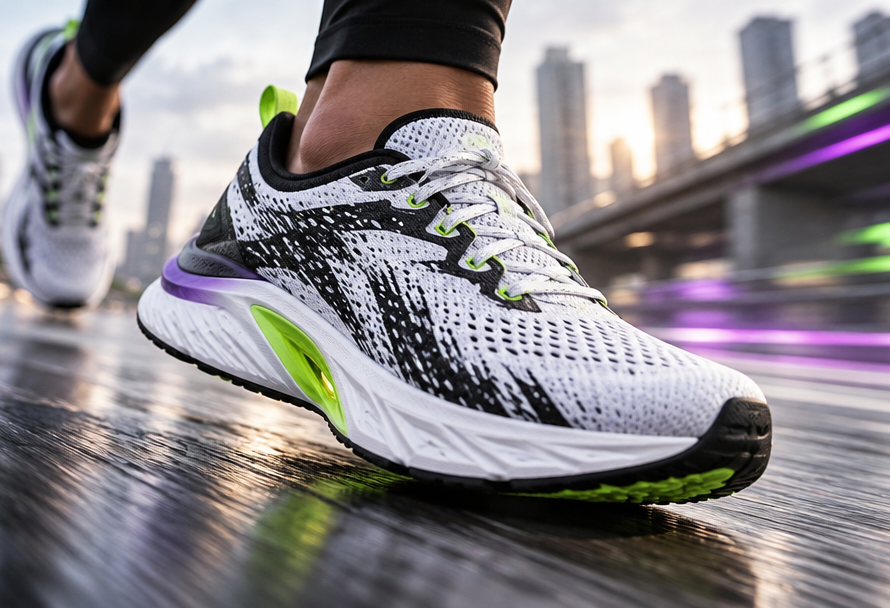


A loose heel. A hot spot that shows up at mile three. A shoe that feels dialed in the store and sloppy on the road. Most runners blame the shoe, the sock, or the day. More often than not, the fix is sitting right there in the laces.
How you lace your running shoes controls how the upper wraps your foot, how much your heel stays put, and how pressure spreads across the top of your foot. Get it right and a good pair of sneakers feels like it was built for you. Get it wrong and every run turns into a negotiation.
This is your practical guide to how to lace running shoes for a locked-in fit, whether you have narrow feet, wide feet, or a pair of GORUN mesh and leather sneakers you want to feel glued to the ground.
Why Lacing Changes Everything
Laces are not decoration. They are the suspension system of your fit. When you pull them, three things happen: the upper tightens around your midfoot, your heel either settles into the heel counter or lifts out of it, and the pressure of the tongue distributes across the top of your foot.
A locked-in fit means your foot moves as one unit with the shoe. No sliding forward on downhills, no heel slip on climbs, no friction points where the upper rubs a moving foot. Blisters are almost always a fit problem first and a mileage problem second.
The good news: you can change everything about your fit in about sixty seconds, without buying anything new.
The Basic Lockdown: Lace Any Running Shoe the Right Way
Start with a proper base. Slide your foot in, lace from the bottom eyelets upward, and keep the tension even on both sides. Do not yank the laces tight at the top – tighten as you climb. Most runners crank the last two eyelets and leave the rest slack, which is exactly backwards.
Here is the standard method that works for most feet:
-
Thread the laces straight down through the bottom eyelets so the cross starts on top.
-
Cross each lace over and up, threading through the next eyelet on the opposite side.
-
Pull the slack down toward the midfoot before moving to the next set of eyelets, not just at the top.
-
Leave the top eyelet slightly looser so your ankle can flex naturally.
-
Tie off with a double knot and tuck the ends so they do not whip your calf.
That last point matters more than people think. A loose lace end is a distraction you feel every step.
How to Fix Heel Slip: Lock Lacing (the Runner’s Loop)
Heel slip is the number one lacing complaint. The fix is a technique called lock lacing, or the runner’s loop, and it takes one extra step.
Lace your shoe normally all the way to the second-to-last eyelet. Instead of crossing to the top eyelet, take each lace and thread it back into the same-side top eyelet, leaving a small loop on each side. Cross the two loops, thread each lace end through the opposite loop, and pull. That creates a locking pocket that pulls your heel back and down into the heel counter.
If your heel still lifts, the problem is usually volume, not lace tension. Add a heel-lock insert or switch to a slightly thicker sock before you size down.
Lacing for Narrow Feet: Ladder Lacing
Narrow feet slide side to side even when the length is right. Try ladder lacing: run the lace straight across from one eyelet to the opposite eyelet at the same height, then up to the next eyelet on the same side. You get a series of even horizontal bars that grip the midfoot more evenly and stop lateral drift without crushing the top of your foot.
Lacing for Wide Feet: Open the Forefoot
Skip the criss-cross. Skip the top-eyelet crank. A wide foot needs room across the forefoot, not a vice at the ankle.
For wider feet, loosen the lower eyelets and leave the forefoot section nearly flat so the toe box can spread. Then tighten progressively from the midfoot up. If your shoe has two sets of eyelets, use the outer set – it opens the fit across the metatarsals where width actually matters.
Many performance sneakers, including mesh models like the GORUN running line, respond especially well to this because the mesh upper flexes with your foot instead of fighting it.
Match Your Lacing to Your Sneakers
Lacing is not one-size-fits-all, and neither is your shoe’s upper. Match the method to the material.
Mesh sneakers, like the FLY 71, the SHARK, or the BLUWAVER GORUN mesh runners, have a flexible, breathable upper. They reward progressive tension – tighten a little at every eyelet and let the mesh do the wrapping. Over-tightening here is easy to do and rarely necessary.
Leather and low-top styles, like the DAYFLOW or the REX-LOB GORUN leather sneakers, hold their structure more firmly. They need less tension to lock in, so keep the midfoot firm and the ankle section relaxed. Leather does not stretch the way mesh does, so fit it right the first time.
High-tops and streetwear silhouettes, like the Neon Green Black Abstract High Top, sit higher on the ankle. Thread the upper eyelets a touch looser to protect your ankle’s range of motion, then rely on lock lacing for the heel.
Quick Fixes for Common Lacing Problems
Tongue pressure or numbness on the top of your foot: loosen the midfoot eyelets and re-tighten from the bottom up. This usually means you skipped a set of eyelets in the middle.
Laces that come untied: switch to a double knot, or look for flat, slightly elastic laces that grip better than round ones.
Heel slip that lock lacing will not fix: your shoe may be a half size too big. Length is not the same as volume.
Toe pain on downhills: your foot is sliding forward because the midfoot is too loose. Tighten the middle, not the top.
Uneven tension: you are pulling one lace harder than the other. Re-lace from scratch and keep both sides mirrored.
Lace It, Lock It, Run
Here is the honest part: no lacing trick can save a shoe that does not fit. Good lacing maximizes a good shoe. It cannot fix a bad one.
So get the shoe right first. At GORUN, we build performance-ready sneakers and apparel at prices that keep running for everyone – bold designs, streetwear energy, and uppers that actually respond to how you lace them. Then take the sixty seconds to lock in your fit.
One lace, one loop, one small change. Do it once and you will feel the difference on your very next run.
Tie them up. Lock them in. We are in motion.